Is DMCA Ignored Hosting Legal? Everything You Need to Know
If you've been searching for offshore hosting, you've probably asked yourself: Is DMCA ignored hosting legal? It's one of the most common questions in the hosting world — and also one of the most misunderstood.
The short answer is yes — but the details matter. In this complete guide, we'll explain exactly why DMCA ignored hosting is legal, how it works within the law, what limitations exist, and what you need to know before choosing an offshore host. By the end, you'll have a clear understanding of the legal landscape.
The Short Answer: Yes, It's Legal
DMCA ignored hosting is legal. It operates within the laws of its own jurisdiction — typically the Netherlands — and doesn't break any international or local laws.
The confusion comes from the word "ignored." People assume it means the host is breaking the law. In reality, "DMCA ignored" simply means the host doesn't automatically comply with US-based DMCA takedown notices — because those notices don't have legal force outside the United States.
Understanding the DMCA
The Digital Millennium Copyright Act (DMCA) is a United States law passed in 1998. It governs how copyright infringement is handled online — but only within US jurisdiction.
Under the DMCA:
- US hosts must respond to takedown notices — often within hours.
- Content is removed first, questions asked later — with no automatic appeal.
- Complaints can be filed by anyone — even without proof of infringement.
- False claims are common — and mostly go unpunished.
The DMCA was designed to protect copyright holders, but its aggressive enforcement has made it a tool for censorship and abuse. That's why offshore hosting exists — to provide a legal alternative for content owners who don't want to be silenced by false claims.
How Jurisdiction Works in Hosting
Jurisdiction is the legal concept that determines which country's laws apply to a specific activity. When it comes to hosting, jurisdiction is determined by where the servers are physically located.
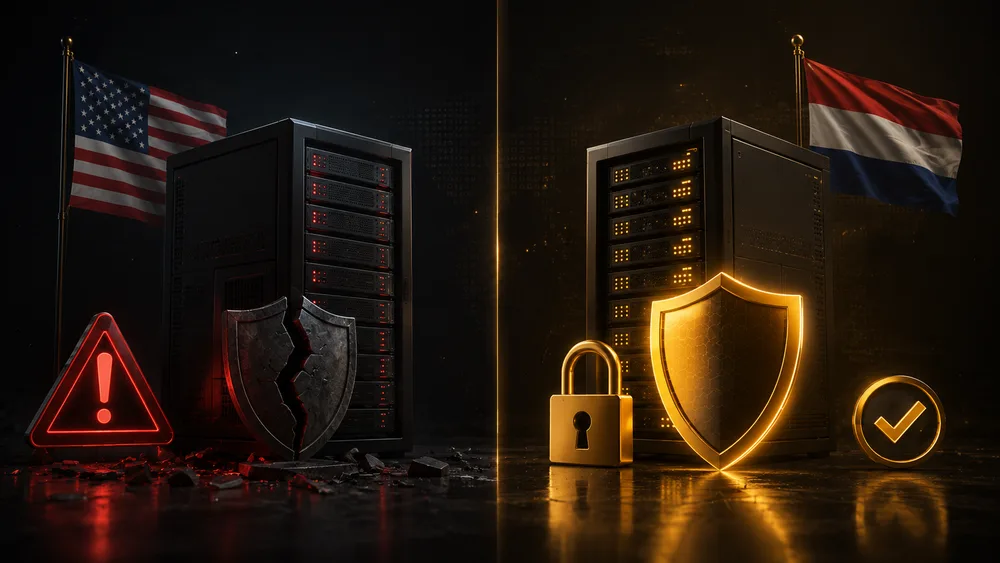
US-Based Servers
US law applies. DMCA notices must be honored. Content is removed fast.
Netherlands Servers
Dutch law applies. DMCA notices are reviewed, not auto-enforced.
German Servers
EU law applies. GDPR protections are strong. Some DMCA compliance.
Panama Servers
Loose privacy laws but weaker infrastructure and slow connectivity.
This is why location matters so much. A DMCA notice sent to a Dutch host has no automatic legal force — it's just a request. The host reviews it under Dutch law and decides whether action is warranted.
Why DMCA Ignored Hosting Is Legal
DMCA ignored hosting is legal for several reasons:
Think of it this way: If you're an American citizen living in Germany, you follow German law — not American law. Hosting works the same way. Your server's location determines the rules.
What DMCA Ignored Hosting Doesn't Mean
There are a lot of myths about DMCA ignored hosting. Let's clear them up:
It doesn't mean lawless
DMCA ignored hosts still follow local laws. You can't host illegal content.
It doesn't mean anonymous
Some hosts offer anonymity — but not all. Privacy and anonymity are different.
It doesn't mean free hosting
Offshore hosting costs money. It's a premium service, not a loophole.
It doesn't mean anything goes
Content that violates Dutch law — like CSAM, fraud, or malware — is still banned.
DMCA ignored hosting is about protection from unfair takedowns — not about escaping accountability.
What's Still Illegal — Even on Offshore Hosting
Offshore hosting doesn't give you a free pass for everything. Certain types of content are illegal everywhere and will always be actioned:
- Child sexual abuse material (CSAM) — illegal worldwide.
- Fraud and financial scams — prosecuted globally.
- Malware and phishing — harmful to users and networks.
- Terrorism-related content — banned in most jurisdictions.
- Drug trafficking — illegal in the Netherlands too.
- Human trafficking — universally illegal.
Even DMCA ignored hosts will cooperate with law enforcement on serious crimes. If your content violates Dutch law, your site will be actioned — regardless of DMCA status.
You can read more in our Terms of Service and Fair Usage Policy.
Dutch Law vs US DMCA: A Legal Comparison
The Netherlands and the United States have very different approaches to online copyright. Here's a quick comparison:
| Aspect | US DMCA | Dutch Law |
|---|---|---|
| Takedown Speed | Instant (hours) | Reviewed first |
| Appeal Process | Weak | Due process guaranteed |
| False Claims | Common, rarely punished | Checked for validity |
| Privacy Protection | Weak | Strong (GDPR) |
| Content Freedom | Restricted | High (within law) |
| Jurisdiction Reach | US only | Netherlands only |
Dutch law prioritizes due process and privacy. It doesn't allow the kind of instant, automated takedowns that DMCA enables. That's why offshore hosts in the Netherlands are so popular with content owners.
Are There Any Legal Risks?
While DMCA ignored hosting itself is legal, there are a few things to keep in mind:
Content Still Matters
If your content violates Dutch law, it can be actioned. Don't confuse DMCA protection with legal immunity.
Jurisdictional Limits
If your home country has strict laws, you may face issues there — regardless of where your server is.
Terms of Service
Every host has its own rules. Always read the Terms of Service before signing up.
Data Retention
Some hosts log data, others don't. Check the privacy policy for details.
Bottom line: DMCA ignored hosting is legal — but it's not a shield against all laws. Use it responsibly, and you'll have nothing to worry about.
Who Should Use DMCA Ignored Hosting?
DMCA ignored hosting is ideal for projects that face unfair takedowns, censorship, or country-specific restrictions. This includes:
Streaming Sites
Platforms that receive frequent copyright complaints.
File-Sharing
Digital distribution platforms.
Private Blogs
Content that faces censorship elsewhere.
News Platforms
Independent journalism and reporting.
Pharma Sites
Restricted in certain countries.
Whistleblower Sites
Platforms for sensitive leaks and documents.
If your project falls into any of these categories, DMCA ignored hosting could be the difference between staying online and being shut down.
How to Choose a Legitimate DMCA Ignored Host
Not all offshore hosts are equal. Some operate in legal grey areas. Others are fully compliant and professional. Here's what to look for:
At MyOffshore, we meet all of these criteria — plus we host exclusively in the Netherlands for maximum protection.
What Happens If You Get a DMCA Complaint?
If someone files a DMCA complaint against your site, here's what happens with an offshore host:
Complaint Received
Your host receives the complaint and logs it.
Review Under Local Law
The complaint is reviewed under Dutch law — not US DMCA rules.
Validity Check
Is the claim valid? Does it represent a real violation of Dutch law?
Action (If Needed)
Only if the claim is valid and represents a serious violation will action be taken.
In most cases, your site stays online. You may be asked to respond, or the complaint may simply be dismissed as invalid.
Debunking Common Legal Myths
Let's separate fact from fiction:
Myth: "It's a legal loophole"
Truth: It's not a loophole — it's a legal business model based on jurisdictional sovereignty.
Myth: "It's only for pirates"
Truth: Legitimate businesses, journalists, and content creators use it too.
Myth: "You can host anything"
Truth: Illegal content — CSAM, fraud, malware — is banned everywhere.
Myth: "It's a temporary fix"
Truth: Offshore hosting is a stable, long-term industry.
How to Stay Fully Compliant
If you want to run a DMCA ignored hosting account responsibly, follow these guidelines:
- Only host legal content — no matter where your server is.
- Respond to valid complaints — don't ignore legitimate issues.
- Follow your host's terms — they exist for a reason.
- Respect local laws — Dutch law applies to your server.
- Keep records — documentation helps if a complaint arises.
- Choose a reputable host — legit providers help you stay compliant.
DMCA ignored hosting isn't about avoiding responsibility — it's about avoiding abuse. Used properly, it's a safe and legal hosting solution.
Common Legal Questions Answered
Can I be sued for using DMCA ignored hosting? Not for using offshore hosting itself — but you can be sued for content that violates local law.
Will my government come after me? Only if your content violates your home country's laws — but hosting itself is legal.
Is it safe to use crypto for payments? Yes — crypto payments are legal and increasingly common in hosting.
Can my host share my data with authorities? Reputable hosts only share data when legally required — and typically only for serious crimes. Check the privacy policy.
Is DMCA ignored hosting recognized as legal? Yes — it's a legitimate, legal service offered by companies worldwide.
Final Thoughts
DMCA ignored hosting is completely legal. It operates within the laws of its jurisdiction — typically the Netherlands — and provides due process instead of instant takedowns. The confusion around its legality comes from a misunderstanding of how jurisdiction works.
If you're running a project that could face unfair takedowns, censorship, or country-specific restrictions, DMCA ignored hosting gives you a legal, stable, and privacy-first solution.
Ready to host with confidence? Explore our DMCA ignored hosting plans or reach out to our team via our contact page — we're available 24/7 to answer any legal or technical questions.
Ready to put this into action? Explore our hosting plans or talk to our team — we're here 24/7.